Showing posts with label Morocco. Show all posts

Friday, September 20, 2013

Last day in Morocco

After we got ready to leave the hotel for Marrakesh, we had breakfast. It was almost same as what we had the day before. But we've got mssamen this morning. This is a good opportunity to see if what I made is close to what others make.

Compared to what I made, this is less doughy and fluffier. To be honest, I liked this better. Also, I could feel the layers when I ate it. I really liked their mssamen. I should probably knead a bit less to avoid gluten formation or experiment with softer flour. Anyway, I'll have to make some adjustments because I assume the flour I can get in the US is slightly different (just because I used a regular flour in Morocco doesn't mean I can all replace it with all purpose flour).


Then, we left the hotel. On the way back to Marrakesh, we stopped by a BBQ restaurant. The meat (lamb) was hanging at the front of the restaurant. When it's really hot, I don't know how safe this would be. But it'll be grilled anyway. Do as the Romans do!

We just picked the meat and told them how much we wanted. There were two options for cooking: kefta and chops. We ordered both.


                    For kefta, they ground the meat in front of us and made the kefta right then.

                                     Both kefta and chops were grilled in front of the restaurant.


While we were waiting for the meat to be grilled, we had tea, bread and some appetizers.

                                  This is very refreshing. I would call it Moroccan pico de gallo?


Lamb chops 


                                                                               Kefta


Grilled tomato and onions on top of the meat made it even better. This is not something I can do everywhere. A very precious experience.

On the way to Marrakesh, we had some nice chats. One of the topics was the freshness of ingredients. I rarely saw canned foods while I was in Morocco. Considering the location of Marrakesh (not close to any seaports and the area looks too dry to grow plants), I thought it'd be difficult to get fresh foods all the time. Even in the Atlas, I didn't see canned foods. They do use dried foods a lot, though. The Moroccan driver told me that making foods from scratch is very important in Morocco. I really hope they keep it that way.

I really enjoyed the stay in Morocco. Everything is so different. I believe seeing and experiencing new/different things is the best part of traveling. Morocco was the best place for that purpose.

I'm flying to Marseille tonight then taking a train to Paris tomorrow. That's the last destination of this trip for me.

Thursday, September 19, 2013

Hiking in Atlas

Before going hiking, we had a nice breakfast at the hotel. It started with tea and olives. Then, they brought bread (something like Hawaiian sweet bread) along with two jams, honey, butter, and homemade olive oil.

                                                The homemade olive oil was really nice.


Then, they brought a fried egg. It seems like just a normal breakfast dish. But they sprinkled cumin on top. Very Moroccan. Cumin can be a bit overpowering. But I noticed Moroccan cumin is less pungent than ones I'm used to in the US. We discussed it at breakfast. Probably what we get in the US is from India. During the cooking class, we used tons of cumin on each dish. But it wasn't as "cumin-forward" as some Indian or Middle Eastern dishes.


After the breakfast, we headed to the Atlas. The tour guide said the hotel would prepare a lunch. And this is our lunch box....

I wasn't surprised that the lunch is tajine. But I was surprised that we are taking it in a super hot tajine pot.... This is how we carried our lunch in the car.... The driver said this is normal. If we had brought charcoal, we could have cooked the tajine in the Atlas.

By the way, the stuff blocking the tajine pot from shifting during the drive is a bunch of pencils that I brought from the US. The tour guide suggested that I bring pencils or socks to give away to local kids because we were driving by small villages. She said that children in such small villages can't afford things like this. We gave away all the pencils at different locations. One lady with a small boy gave us a gesture of "wait" when we gave a pencil to her son. She started to pick up walnuts on the ground and gave them to us. That was a very touching moment.....


Once we arrived at rocky area with a nice creek, we decided to have a lunch there. We brought some utensils but we decided to eat like local people and eat it just with the flatbread we brought. The Moroccan driver demonstrated how to eat it. It's pretty much the same as how Indian people eat food with naan. It was a very nice experience.

Lots of vegetables, such as eggplant, zucchini and potato. The zucchini is stuffed with kefta. Very good.


It seems we are the only people staying at this hotel (not a big accommodation, it's only 10 rooms or so), probably because it's on weekdays. The hotel is in such a remote area with no foreign tourists. It's really nice that we can keep the entire inn to ourselves. But the lounge where we had dinner was very quiet - I wish I could have interacted with other local people.

Anyway, the tagine of the night is eggplant with meat (probably lamb).


This dessert is very interesting. It was very refreshing. Because the lounge was pretty dark, we couldn't tell what it was at first (it's interesting how much we can not tell what we are eating without vision). Then, we could taste orange juice. But it took a while to figure out what this is. It is grated cucumber! I never thought that these two ingredients make such a nice dessert. It may be my personal preference because I love cocktails with cucumber (which not everyone is crazy about...). But this was a new finding for me. It seems this is a creation of the chef. I don't think this is something traditional Moroccan.


Tomorrow, we are driving back to Marrakesh and then flying to Marseille, France.


Wednesday, September 18, 2013

Going to Atlas

Now that we've finished the 3 day intensive cooking class, we are going on a 3 day road trip to Atlas (mountains). In addition to the owner of the riad (now, she is a tour guide), a local Moroccan driver joined our road trip. Luckily, he spoke English pretty well (and of course, French fluently). By the way,  he can text in Arabic with one phone, talk to a client in French on another cell phone, then still listen to our conversation in English and join us when he is not talking on the phone. Isn't that amazing???

By the way, tea is a big part of Moroccan culture. They drink coffee too but it seems tea is the standard drink for many occasions. But one unusual occasion is before a meal -  not after a meal like we have coffee. But if we consider the fact that Moroccans don't drink alcohol, it makes sense.

On the way to Atlas, we stopped by at a tea shop.

Until this time, all the tea I had was made by the riad owner. It was pretty sweet but within reasonable sweetness. This tea is real... Very sweet. I knew that this was authentic. 

Along with the tea, we had the leftover sweets that I made yesterday. The Moroccan driver said the fekkas was really good. That was my favorite so I was very glad to know that it was good enough to please a local person.

As soon as we arrived at the hotel, which is amazingly rustic and beautiful, we had another tea.

 Again, this is "authentic" tea. It was fantastic but two small glasses would be enough.....


Followed by the tea, we had a lunch there.


                                     Nice salad, each component was prepared individually.

Don't they look amazing? I thought this was chicken but it was actually turkey. I didn't know Moroccans eat turkey. The seasoning was very good. I wish these were chicken because the meat was a bit dry.


After the lunch, we went hiking. What we found was...

Nice pomegranate trees. they are all wild. Unfortunately, the fruit wasn't ripe yet. I tried one but it was still too tangy.

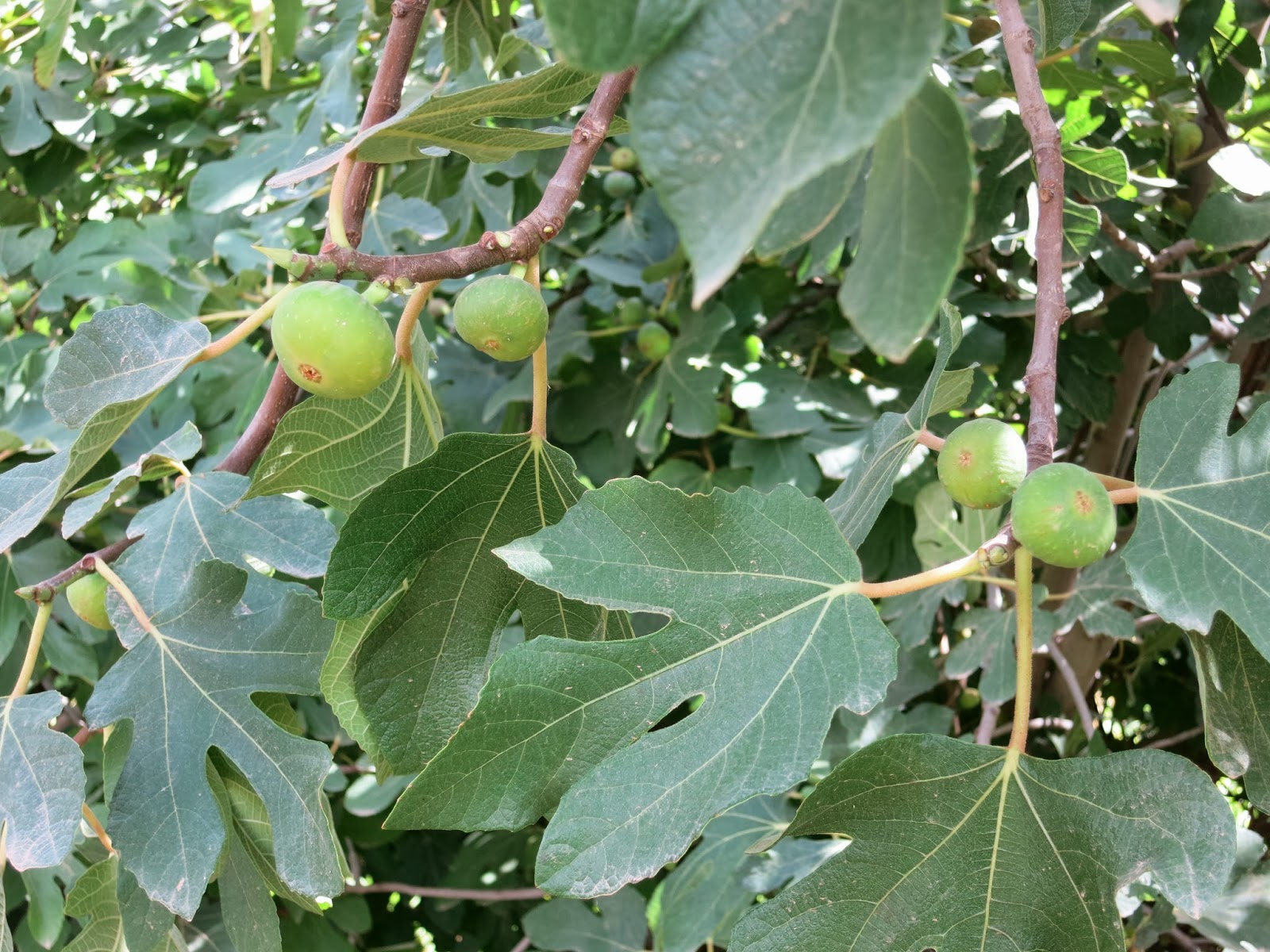
                   We also found many fig trees. Most of them were not ripened yet. But....


This is perfectly ripened fig. I have to say this is the best fig I've ever had. Perfect texture, color and sweetness. I always notice some grassy aftertaste when I eat figs. So, I had never been a big fan of figs. But this was ripened perfectly on the tree so that the grassiness was gone and it was just sweet.... Unfortunately, we didn't find that many perfectly ripened figs. In a few weeks, almost everything would be like this, though.


After we came back from hiking, it was time for dinner. We had a dinner at the lounge with very dim light, which is traditional in Morocco. Even Moroccan restaurants in the US have very dim light... So, the photo quality wouldn't be great.

This is their version of harira. Compared to the one we made during the cooking class, this was much simpler. More liquid.. I wonder if what we made was gourmet version and this is more standard. But I liked what we made yesterday. By the way, cumin is a condiment in Morocco. So, there was cumin in addition to salt and pepper. I added a pinch of salt and cumin, then it tasted so much better.


This is the first tajine I've had outside the riad. I forgot what meat it was. But it was very "tomatoey". Also, because of the prunes, it tasted very light. I liked it.

It's always nice to have the same or similar dishes in different places. The more I try in different locations, the more I understand the dishes.


Tuesday, September 17, 2013

Last day of cooking class

It's already the last day of cooking class. After we discussed the menu and the ingredients we needed to get, we headed to the market. People at the market started to recognize me because it's my third day there. I felt like I was semi-local.

When I was making Mssamen two days ago, the assistant Moroccan girl was laughing at me because the way I was kneading the dough wasn't right. We had lots of baking today, so, it was my opportunity to show her that "I can do this!" The way she kneaded dough was very different from regular bread dough kneading. But that's the way all Moroccans do it. So, I really wanted to nail it.

I still felt a little uncomfortable kneading the dough in the Moroccan way. But I noticed that she was laughing less today and started to nod sometimes. So, I kept doing it. Eventually, she let me alone. Usually she stays with me and takes it over because she can't keep watching me doing it wrong... I guess, she trusted me now!!!


Batbout

This is another Moroccan bread


                              It looks like pupusa (without filling) but it actually tasted like a pita


Beef Tangia

The beef was marinated the day before with spices, Moroccan ghee, preserved lemon and sugar. After we transferred the beef to the tangia (pot shown below), we went outside.


The instructor took us to the back room of a hammam (traditional public bath). There was a man who takes care of the coals that warm the bath. Traditionally, the heat in the room has been used to cook tangia. The heat is pretty low so that it's suitable for slow cooking. Because this is a man's job, tangia is considered as men's food. It was an amazing sight. I was so glad that we could experience something like this.


            After cooking for almost 8 hours in such low heat, the meat completely falls off the bones.


Lamb kefta

Freshly ground lamb meat at the market in the morning is mixed with spices and seasoning. The sauce is cooked separately although the ingredients are pretty much same. It seems that's the way it is supposed be.

Finished with eggs. The eggs are not beaten before adding, instead, I broke the egg yolks with a fork and spread them out on top of the kefta.


[Added in May, 2020 - Lamb Kefta cooking video]


Harira

Harira is a traditional Moroccan soup that is particularly popular during the month of Ramadan.

We prepared this yesterday. A whole chicken would be in the soup. We cooked the chicken for a half day, then shredded the chicken meat


Lots of meat, beans, vegetables, spices, herbs.... A very rich and hearty soup. Excellent! Any soups that I've had here have been fabulous.


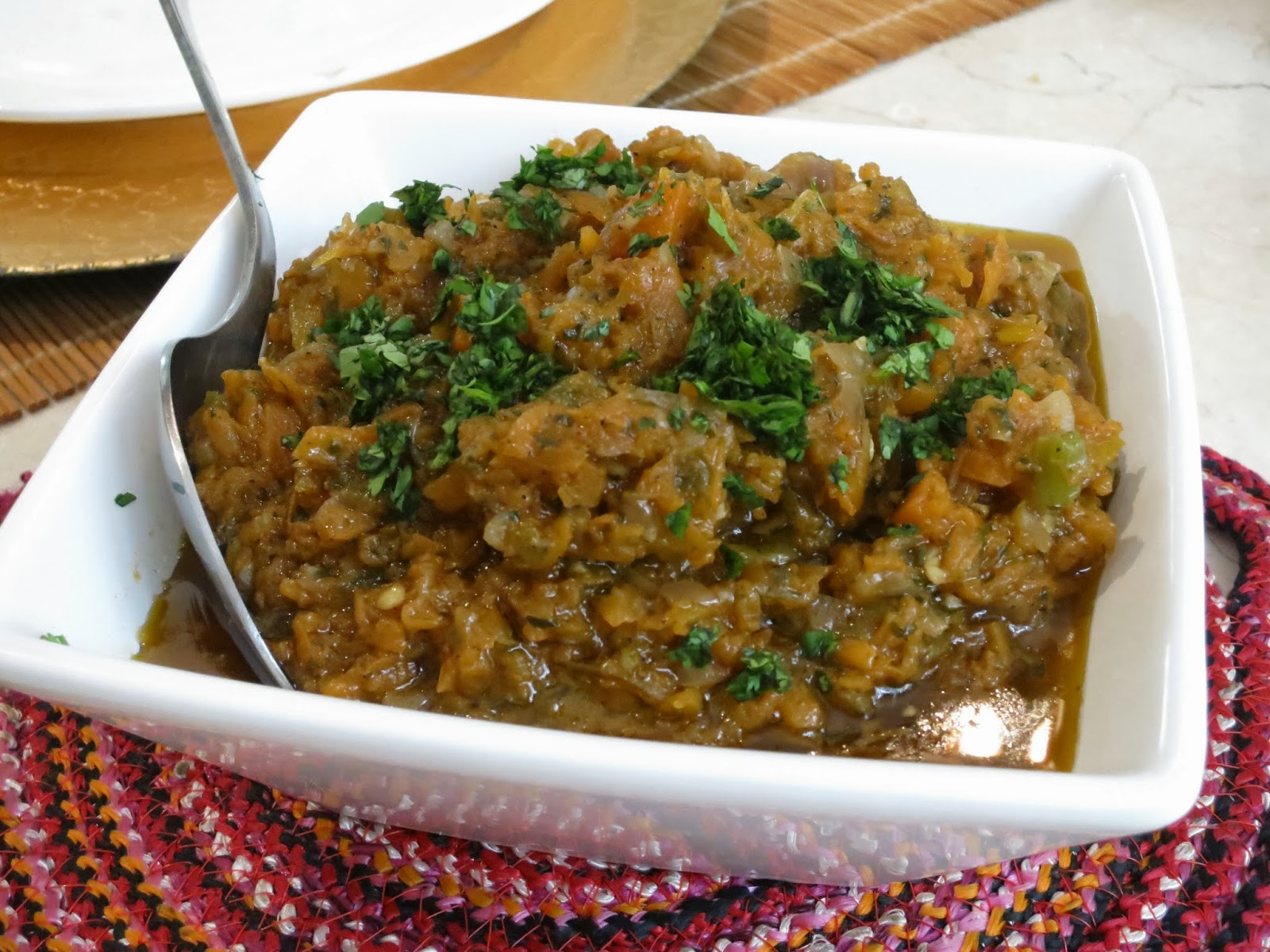
Pumpkin Chutney


Stewed Eggplant

This looks almost same as the pumpkin chutney above. In fact, the ingredients other than pumpkin / eggplant are pretty much the same. The stewed eggplant is less sweet, though. The eggplant is parboiled and therefore it's very soft. I liked this a lot.


Zucchini salad, pumpkin chutney, mashed sweet potato and eggplant with honey and salt
   (from upper left - clockwise)


Ghoriba

                                              I would say this is the Moroccan version of a macaroon.


Fekkas, Krachal and Ghoriba

                    Fekkas is Moroccan version of biscotti and that was my favorite dessert.


It is very difficult to spell out Arabic with the Western alphabet. All the names on my notes are based on what I heard. So, before I write them down on this blog, I Google just to make sure I get the right spelling. But there are too many variations.... So the spellings I have here are just one of the many spellings available online.


At the end, I asked the instructor how to make preserved lemon. Preserved lemon is not something you can make in a day or two. So, we did this at the end of the class. It was quite simple. Just cut the lemon into quarters leaving one end attached. Then, push as much salt as you can into the crevices. That's it. She said I could add lemon juice later if it's too dry. No, spices or herbs. Just lemon and salt. I'm a big fan of fermented food. And I like the distinctive fermented flavor of preserved lemon.


I can't believe how many dishes we made in 3 days. This was totally worth it!!!

Monday, September 16, 2013

The second day of cooking class

I'm just by myself today. We discussed the menu and it looks a lot of food! I was so excited. Like yesterday, we went to the market for shopping. On the first day, we had something like eggrolls. The skin was neither filo nor eggroll, though. I just found out that is called warqa. It is thicker and more flexible than filo dough. It seems most Moroccan restaurants in the US use filo dough as a substitute for warqa. I saw how it's made at the market - very fascinating. They grab sticky dough (much stickier than pizza dough) and drop it onto a hot crepe pan. Most of the dough is still sticking to their hands and only a small amount of dough stays on the pan. This creates a paper-like thickness. After it's cooked, they brush a small amount of oil between each sheet to avoid having them stick to each other. Unlike filo dough, it doesn't get dried out so quickly.


Lamb Tagine

Spiced and seasoned lamb was covered by sliced sweet potatoes.


Grilled Sardine

Spiced and seasoned sardine fillets are placed on top of sliced oranges and tomatoes and grilled. Very nice. I thought the orange is for the flavor but I found out we are supposed to eat the fish with the orange slices.


Warqa with almond paste

                                                               This is warqa, cut into strips

                              Almond, sugar and butter paste are wrapped in to make a triangle shape

                 There could be a specific name for these sweets. But I forgot to write it down....


Bastilla

This is traditional bastilla with pigeon. Again, this is a super fresh pigeon which was alive a few hours ago... But these particular pigeons were pretty small.


The pigeons are fried in a pot with various spices and aromatics. Then, water is added and cooked until it gets really tender. After removing all the bones, the meats are shredded very finely

Shredded meats and reduced cooking liquids are wrapped in warqa and baked in the oven.

Topped with powdered sugar and cinnamon. Compared to bastilla I've had in the US (with filo dough), it was more difficult to eat with fork only (I used a knife). The warqa is much tougher.


Another application of warqa. The instructor let me choose the shape so that I don't think this is the traditional way of presentation. The filling is caramelized onion and golden raisin. When I was at culinary school, we had a final exam for international cuisine class. Every student was given 1/2 chicken and cooked an appetizer and main dish to represent the country that the student was assigned to (everyone had a different country). Mine was Morocco. The only criteria are to utilize the chicken as much as possible and create the dish to represent the cuisine's characteristics. Because the other ingredients are only things available in the kitchen, we couldn't create an authentic dish. Any fusion dishes were fine as long as they are identifiable as coming from the specific cuisine. Interestingly, I made something like this. It's very funny.


Beet soup

This is another very satisfying vegetarian soup, the liquid on the top is orange juice and melted butter


Moroccan Salad

                                 This is the same Moroccan salad that we had on the first day.


Crepe

I guess this is the French influence. Pretty much the same as a French crepe but it's a bit fluffier so that it's closer to a Swedish pancake. We could have used any filling but this is just a plain crepe. We used vanilla sugar (for most sweets we made, also). It seems vanilla sugar is more popular than vanilla extract.

By the way, people in most parts of Morocco are heavily influenced by France and many of them speak fluent French (Moroccan law is written in French). But the northern tip of Morocco is more Spanish influenced (obviously because it's close to Spain). I would love to see how food in that region differs from the rest of the Morocco.

We prepared more stuff for tomorrow. I'm going to explain these dishes in tomorrow's entry.

Sunday, September 15, 2013

The first day of cooking class

The owner prepared a nice breakfast.

                                                                      Fruit and yogurt


The triangles behind the croissant are called Mssamen which is kind of like a flat crepe. It's more chewy and dense than a crepe though. To me, it's like a Chinese onion pancake without the onion. I think that's the closest comparison I can make.This is something very traditional, so I saw it at many food stands in the city. We are going to make this in the class.

I discussed what to cook with the instructor (the owner of the riad). She is an Australian who married a Moroccan gentleman. She's lived in Morocco for more than 10 years. She also has a Moroccan assistant whose English is very limited. We've decided to make quite a few dishes. I didn't recognize some of the dishes but I said "yes" to almost all of her suggestions because I wanted to try things that I didn't even know.

I was told that I'll have a classmate just for today. A very nice English man showed up as she started teaching us how to go to the market and buy ingredients in Arabic. After the super short Arabic crash course, we headed to the market. The market is located in a place I would not have expected. The inside was pretty big and looked very "authentic" (if you know what I mean....). Many groceries, produce, meat, poultry and seafood. The seafood looked super fresh which I didn't really expect because Marrakesh is not that close to the sea. It seems they ship fresh seafood every day from nearby ports. And some of the meats are "SUPER" fresh. They are really fresh because they are still alive (think chicken, pigeons and rabbits). We just told them how many we wanted and how we were planning to prepare them. Usually we ordered meats first and then continued with other shopping. After all the shopping was done, we'd just pick the meats up.

We took turns ordering the ingredients in Arabic. Basically we were just reading whatever we wrote down in our notebooks. People at the market were nice enough to tolerate our horrible pronunciation. I really enjoyed this because I had the riad owner as a "back-up",


As soon as we came back from shopping we started to make Moroccan mint tea. We started by washing tea leaves. First we poured hot water very gently onto the tea leaves. The liquid is poured out very gently again and saved (this is not to wash the tea leaves). Then, we poured hot water again (not gently this time) and shook well. We repeated this 3 times in order to remove any dirt from the leaves. The reason the first water is saved is that it's the best part of the tea. After that, we filled the pot with clean hot water along with sugar and a bunch of mint. Then, we let it sit for a while. When served, it's poured from high above the cup "3 times" to cool the tea a little and also to create foam. I'm so glad to know how to make real Moroccan tea.

Mssamen

I learned how to make this with the Moroccan assistant. This is like a baguette for the French or pasta for the Italians so don't mess with Moroccans about mssamen! The Moroccan assistant was very specific about how to knead the dough (which is a non yeast dough). You have to hold both hands in a specific way and press them down in a specific way (yes, very specific...). No matter what I did, the assistant kept laughing and didn't approve it. What's the difference??? Neither me or my English classmate could get her approval.....


The rolled out dough is folded with a small amount of oil so that it makes layers.


Tomato chutney with egg

This is the instructor's creation. Normally the tomato chutney is served alone but she added eggs on top. It looks like shakshuka which is typical breakfast dish from northern Africa to the Middle East. But she didn't know about it, so maybe not in Morocco? Anyway this is very good!! We had this for lunch and it was definitely the favorite dish of the day for both me and my English classmate.


Chicken Tajine

Tajine is the famous Moroccan cooking pot. The shallow pot and cone shaped lids function like a slow cooker. This chicken was the one that was alive a few hours ago. The English classmate said the meat was still warm. But we later figured out that the warmth is from the hot water the butcher used to clean it. When I filleted a fish that was alive a few hours before, I felt some muscle spasm because the nerve system was still alive. So, I was a bit afraid that I may feel the same thing from the chicken. Luckily I didn't feel any... Good.....

The chicken was prepared with preserved lemon. The lemon was cut into a half and pressed into the top of the chicken before cooking. That's probably the traditional way, but I wish we could use chopped or mushed preserved lemon to enhance the lemon flavor. Still, good though.


Sardine kefta tajine

This is another good dish. Like I said above, the seafood was very fresh at the market. And so was this sardine. It looked like we could have eaten it raw - it was that fresh. The filleted sardine was mashed with herbs and spices by hand so that you could tell this is really a fish ball. The result was very "good" fishy balls (without that bad fishy-ness). I wish we hadn't cooked it so long because the fish was so fresh. But everything in a tajine pot should be cooked slow and long. So, this must be cultural.


Cous cous

The Moroccan assistant did most of the preparation for this. She spent quite a bit of time rubbing cous cous with oil and water until it gets the right texture. Then, she steamed it with water flavored with spices and lemon juice. This is something I didn't know at all. Then, she rubbed it again with oil. I'm so glad I got to see the proper way to prepare cous cous. The is the presentation used for a special occasion so it's not always garnished with powdered sugar, cinnamon and almond as you see in the photo below.


After lunch, we went to the spice market. A young Moroccan man welcomed us with tea and explained the different spices with in very good English. This is a spice market for bulk purchase so it doesn't look like a store but the corner of the warehouse.


By the way, we often used the spice, called Ras El Hanout, which means "Head of the shop." This is mixture of essential spices, such as cardamom, nutmeg, anise, mace, cinnamon, ginger, various peppers, and turmeric. But the recipe varies based upon who made it. I would say this is Moroccan version of garam masala.


After we came back from the spice market, we continued cooking.


Egg dipped cauliflower

Boiled cauliflower is broken down to smaller pieces and dipped into an egg, spice and herb mixture, then fried. Again, this is another satisfying vegetarian dish.


Squid

The squid was marinated in various spices & herbs and orange juice for a few hours, then cooked slowly. Both me and the English classmate thought that squid is supposed to be cooked quickly to avoid making it tough. But because the squid is marinated and cooked slowly, the squid meat was very flavorful.


Baked meringue and saffron custard

We made two deserts today. The baked meringue is the same one that we had last night. Saffron custard is another typical Moroccan desert.


I guess we did a lot in one day... I just can't wait for the next two classes!